
History of Brazil – Part 3: The Gold Cycle and the Transformations of the 18th Century
HISTÓRIAS DO BRASIL
Blog Toda História
12/24/2025
traduza para inglês:tThe Gold Cycle and the Transformations of the 18th Century
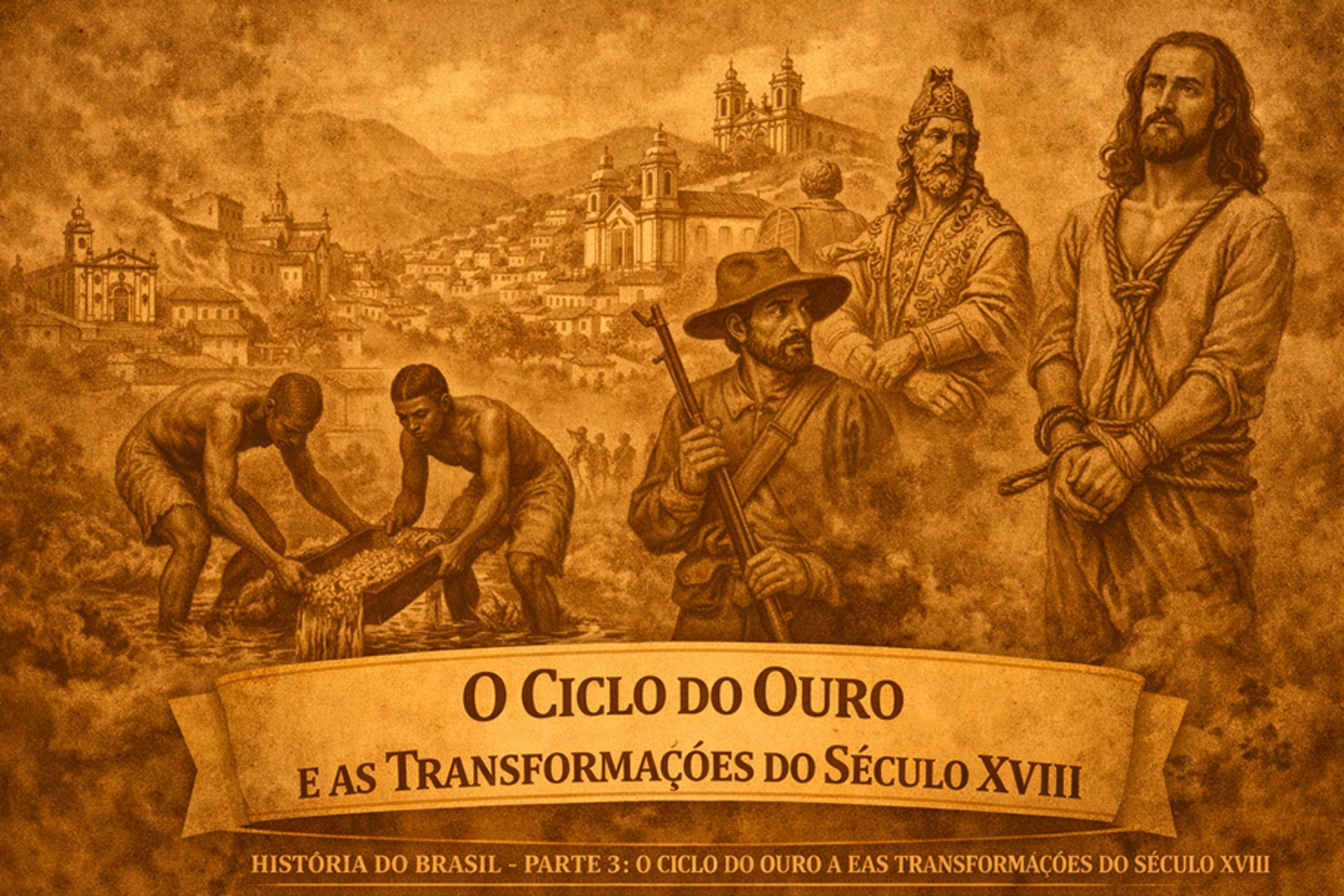
The 18th century shone over Brazil with the splendor and ambition of gold. After more than two centuries focused on the exploitation of brazilwood, sugarcane, and the northeastern coast, the Portuguese gaze turned toward the interior of the colony. In the mountainous regions of Minas Gerais, Goiás, and Mato Grosso, the soil concealed riches capable of profoundly transforming Brazil’s destiny. Thus began the Gold Cycle—an era marked by prosperity, exploitation, and intense economic and social changes.
The Discovery of Gold and the Rush to the Interior
Everything began at the end of the 17th century, when bandeirantes from São Paulo discovered the first gold deposits in Minas Gerais. The news spread quickly, triggering a true gold rush. Thousands of people left the coast in search of fortune, giving rise to settlements and villages that seemed to appear out of nowhere.
Cities such as Vila Rica (present-day Ouro Preto), Mariana, Sabará, and São João del-Rei became vibrant centers of wealth, culture, and contradiction, symbolizing the colony’s new phase.
Control by the Portuguese Crown and Taxation
The prosperity of the mines shifted the economic axis from the Northeast to the Southeast, generating tensions among regional elites. To secure its profits, the Portuguese Crown imposed strict control over mining.
The Foundries (Casas de Fundição) were created, where all extracted gold was melted down and stamped with the royal seal. In addition, the quinto was established—a 20% tax on all production. When quotas were not met, the dreaded Derrama was enforced, a compulsory collection that plunged the population into fear and revolt.
Enslaved Labor and the Contradictions of Wealth
Despite the shine of gold, the reality in the mines was harsh. Most of the wealth was concentrated in the hands of a few, while thousands of enslaved Africans were forced to work under extreme conditions.
They faced narrow tunnels, constant risk of cave-ins, and exhausting workdays. Even so, they were the main force sustaining the economic splendor of the gold era.
Cultural Flourishing and the Minas Gerais Baroque
Wealth also fueled a remarkable cultural flourishing. Mining towns became cradles of Brazilian Baroque art, an expression marked by faith, grandeur, and emotion.
The most renowned figure of this period was Antônio Francisco Lisboa, known as Aleijadinho, who transformed stone into art. His works—such as the Twelve Prophets of Congonhas and the altars of the Church of Saint Francis of Assisi in Ouro Preto—remain enduring symbols of Brazilian colonial art.
Urbanization, Society, and Religiosity
With gold, Brazil underwent a process of urbanization. Trade expanded, new professions emerged, and the population grew rapidly. Portuguese, Indigenous, African, and mixed-race peoples lived together in cities, gradually shaping a Brazilian identity.
In this context, popular religiosity flourished, blending European Catholicism with African and Indigenous traditions, giving rise to unique spiritual practices deeply rooted in national culture.
The Gold Crisis and the Inconfidência Mineira
By the late 18th century, gold deposits began to run dry. Revenue declined, and the Crown intensified tax collection, rekindling fears of the Derrama. This climate of tension encouraged the rise of protest movements.
In 1789, the Inconfidência Mineira broke out, inspired by Enlightenment ideas and by the examples of the French Revolution and the Independence of the United States. Intellectuals and military officers planned to free Brazil from Portuguese rule.
Among them stood Joaquim José da Silva Xavier, known as Tiradentes, who became the symbol of the struggle for freedom. Betrayed before the plan could be carried out, he was the only one sentenced to death—hanged and quartered. His image, however, endured as a martyr and a precursor of independence.
Political Reorganization and the Transfer of the Capital
The economic importance of the mining regions led Portugal to reorganize colonial administration. In 1763, the Viceroyalty of Brazil was created, and the capital was transferred from Salvador to Rio de Janeiro, consolidating the colony’s new economic and political center.
This shift paved the way for the major transformations that would mark the 19th century.
The Legacy of the Gold Cycle
The Gold Cycle lasted less than a century, but it left deep and lasting marks. It spurred the settlement of the interior, strengthened art and culture, promoted urbanization, and ignited the first sparks of Brazilian independence.
It was an era of brilliance and suffering, of faith and rebellion—a luminous and shadowed chapter that helped shape the foundations of modern Brazil.raduza para inglês:
For further reading, most recommended works on Brazilian history are available in Portuguese.
Read more:
Email:
Give your Feedback:
contato.todahistoria@gmail.com
© 2025-2026 Todo História - All rights reserved.
This website may contain affiliate links.
By submitting the form, you represent that you agree to the Terms of Use and the Privacy Policy. The content of this message is not shared with Brevo.